

Timba - the samba hand drums

Updated: Jul 18, 2025
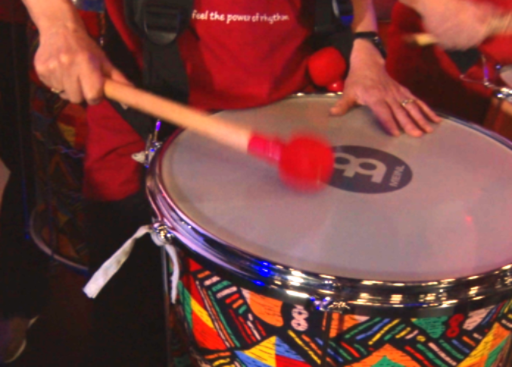
This blog continues the series that has been focused on the different instruments used by the Worldwise Samba Drummers. The subject of this blog is known by different names to English-speakers - timba, timbal or timbau. It is a tall, single-skinned instrument, wider at the top than at the bottom, and it is struck with the hands in a similar way to the better-known djembe and conga drums. The timba is most associated with the style of music known as samba reggae, originating in the Bahia region of Brazil, though the Worldwise Samba Drummers use it in all pieces.

There are three main sounds made using the timba.
1. Bass. This is produced by hitting the drum skin just off-centre. Although the fingers of the hand will inevitably strike the skin, it is the palms of the hand that make the sound. The aim here is to produce a low-pitched sound.
2. Slap. This is produced when the drum is hit so that the bottom of the palm strikes the edge of drum and the fingers dig into the drum skin. In this case, it is the fingers that are making the sound that should be short and high in pitch. For many people, slap is the most difficult of the three sounds to perfect.
3. Tone. This is produced when the skin is hit so that the top of palm hits the edge of the drum and the fingers bounce off the skin. The aim is to produce a medium high-pitched, resonant sound.

Many of the Worldwise Samba Drummers timba patterns use just bass or slap with some also making use of tone. When played as part of a bateria (samba drumming band), the timba is usually worn on a waist strap or harness. It should be positioned so that the hands are in line with the forearms when striking the drum skin - there should be no bend at the wrist when playing bass notes or slaps and minimal bend at the wrist for tone notes.

The timba adds ‘spice’ to the drumming patterns and is sometimes used for solos. Worldwise Samba Drummers have a timba section that plays by themselves at the start and mid-way through both Ogun - one of our candomble arrangements - and one of our batucada pieces called Lazy Coconut. They also feature prominently in the introduction to the samba funk piece Pula Pula. Individuals sometimes play solo during the break to one of our fusion pieces, Samba Ragga.
If you have found this useful, feel free to look back over the other recent blogs that have considered the other sections of the samba band - surdo, caixa, tamborim, agogo.
Please get in contact using the Contact Us or Join Us links if you would like further information about the Worldwise Samba Drummers.


Comments