

What do samba bands play? Part 2: Afoxe and Maracatu

The previous blog post went into detail about candomble, one of the Brazilian musical styles that formed the basis of samba. Candomble is a spiritual practice, albeit one that is sometimes shared with people from outside such as when candomble pieces have been taught to Worldwise Samba Drummers by a candomble initiate. Afoxe is a style of music similar to candomble but performed more informally. It is played on the same sorts of instruments as candomble - atabaques (similar to conga drums), agogo bells and shakers - and still holds spiritual significance for candomble practitioners despite its more public presentation.
The Worldwise Samba Drummers play two Afoxe pieces. Both are arranged for our instruments - agogos, caixa (snare drum), timba (hand drum), surdo (the large bass drums) and chocalho (shaker). The piece we know as Afoxe features a variety of breaks including a false ending (in which the band suddenly halts into silence as if it has ended only to continue again) and an end break which climaxes with loud, rapid drum rolls from the timba section.
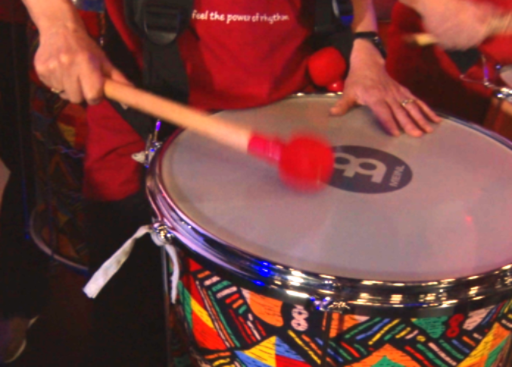
Our other Afoxe piece, known to us as Ijexa after the rhythm upon which these pieces are built, brings all the surdo together into a shared pattern for one beater and an empty hand (no beater). The empty hand is placed against the drumhead at the start of the pattern and lifted partway through. When the hand is against the drumhead, sounds made by striking the drum with the beater are muted; when the hand is lifted, the sounds are full and resonant as usual.

This Afoxe piece also includes a loud vocalised ‘Ey!’ as part of the break pattern, a brief reference to the sung call and response sequences that would be included in Afoxe performances featuring singers.

Another of the early styles of samba-like drumming is Maracatu which emerged from the north-east of Brazil. In the music, dance and rituals surrounding traditional Maracatu can be observed elements introduced by indigenous Brazilians, Afro-Brazilians, and the Portuguese colonisers. Whilst early Maracatu was part of spiritual practice, later versions emerged which, whilst still potent with cultural significance, were not so tied to those spiritual practices.
As is the case with candomble and Afoxe, the instruments used for Maracatu aren’t quite the same as those used by Worldwise. Maracatu features syncopated playing on the alfaia (a large drum equivalent to the surdo but tightened using string and so imprecise in its tuning), as well as bells, shakers and sometimes timba. Worldwise Samba Drummers have a Maracatu piece that we occasionally play though it hasn’t been part of our repertoire for a couple of years.
Anyone from this area of the UK who wants to hear Maracatu is advised to check out Manchester-based Juba do Leao. Their website also goes into much more detail about the history of Maracatu.
Please check out the other blog posts and get in contact using the Contact Us or Join Us links if you would like further information about the Worldwise Samba Drummers.


Comments